Einstein's Pretend Academy
In this lesson
- A small ritual to beginHow to read this: a lamp, one sonata, a pen.
- History: a university for threeA rejected clerk and two friends found a university.
- Philosophy: the books that unwound timeThe reading that taught him to doubt absolute time.
- Literature: the man who read too muchDon Quixote, and the joke that the windmills were giants.
- Music: the violin in the kitchenThe instrument he played until the answer came.
- Art: look before you read onOne painting: the dreamer ahead, the friend behind.
- Language: five small things to keepAcademy, Gedankenexperiment, and three more.
- History again: the immortal academyFifty years on, a love letter to a joke club.
- Remember what you've learnedNo exam. Keep the line that stopped you.
Read one part at a time. Press Next when you are ready.
Bern, 1902. A city of arcades and clocks, and a young man walking to work.
He's never going to amount to much.
Everyone agrees on this.
He is twenty-three, he has a physics degree, and the universities have all turned him down: no professorship, no assistant's post, not even a foot in the door. His teachers found him brilliant and impossible. For two years, he has scraped by tutoring other people's children.
Now, at last, he has a steady job: technical clerk, third class, at the patent office, reading other men's inventions all day and stamping them yes or no.
His life has settled into its shape: a desk and a wage.
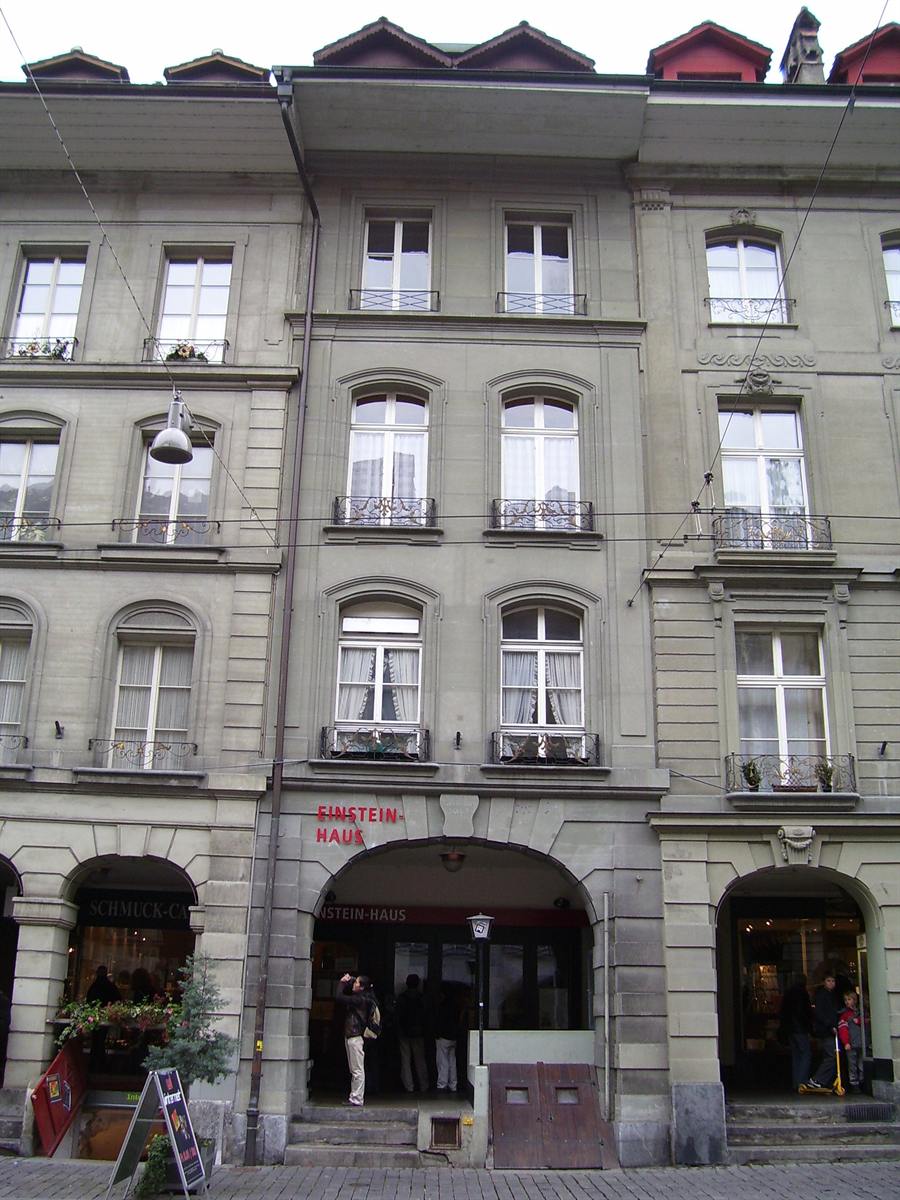
His name is Albert Einstein.
To make a few extra francs, and because he cannot help himself, he runs a small ad in the Bern paper: Physics lessons. Three francs an hour.
A Romanian student named Maurice Solovine answers it, and knocks on his door.
They talk for two hours, almost nothing of physics. When Solovine finally gets up to go, they are still arguing in the doorway, and within a few visits Einstein waves the money off, because he can't charge for the best conversation of his week.
A mathematician friend, Conrad Habicht, starts turning up, too.
Three broke young men, in a rented room, with no titles and no laboratory and nobody's permission.
They decide to found a university.
A small ritual to begin
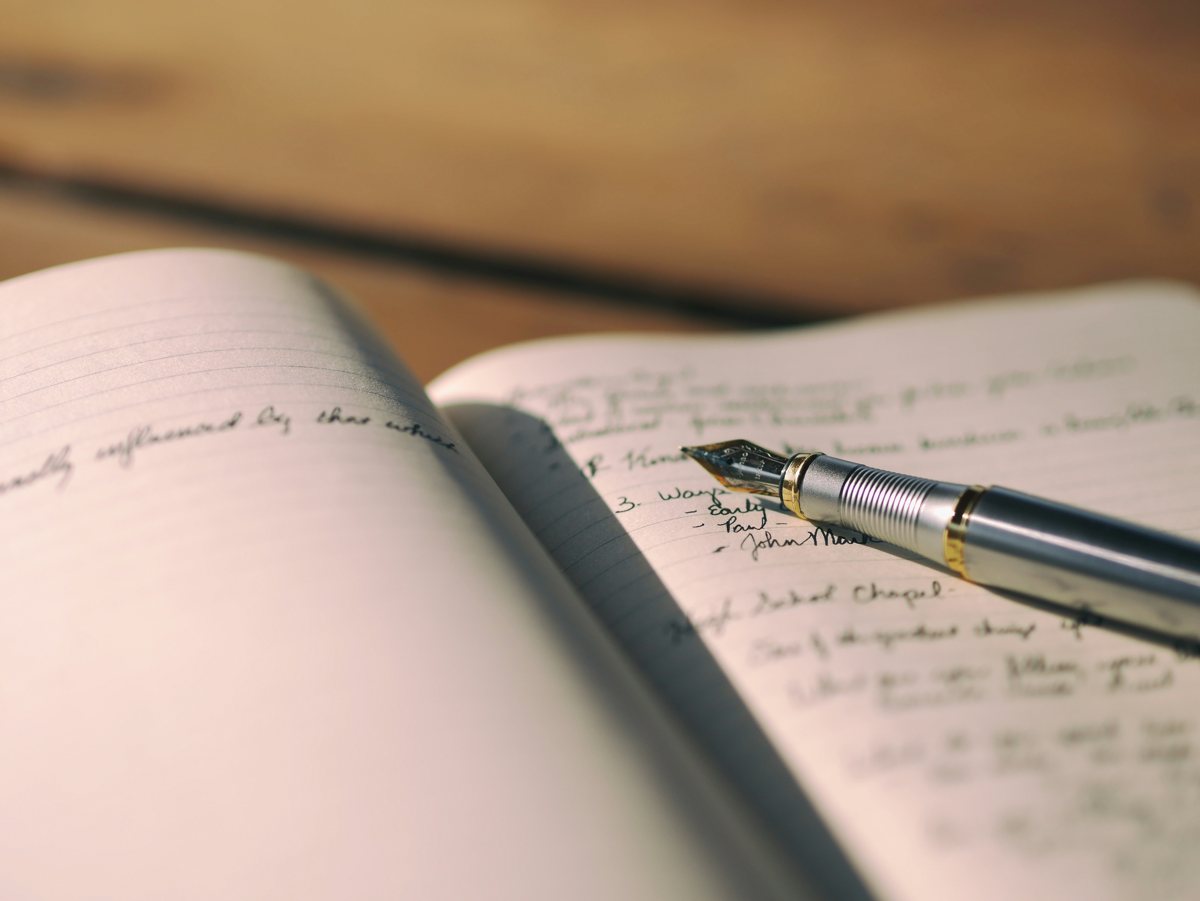
Set the scene. A lamp, something warm to drink, the phone in another room. The Academy ran on sausage and cheap tea, so you are already better fed than they were. Print the pages if you can, and keep a pen close; the margins are yours.
Put on the music. There is only one piece tonight, and you will understand why later. Start it low and let it run: the playlist. It is about eleven minutes. Set it to repeat if you read slowly, the way I do.
Copy what stops you. Somewhere in here is a line you will want to keep. When you find it, write it out by hand in your commonplace book. That is how a line becomes yours.
They did not wait for permission. Neither do we.
What is in the kit
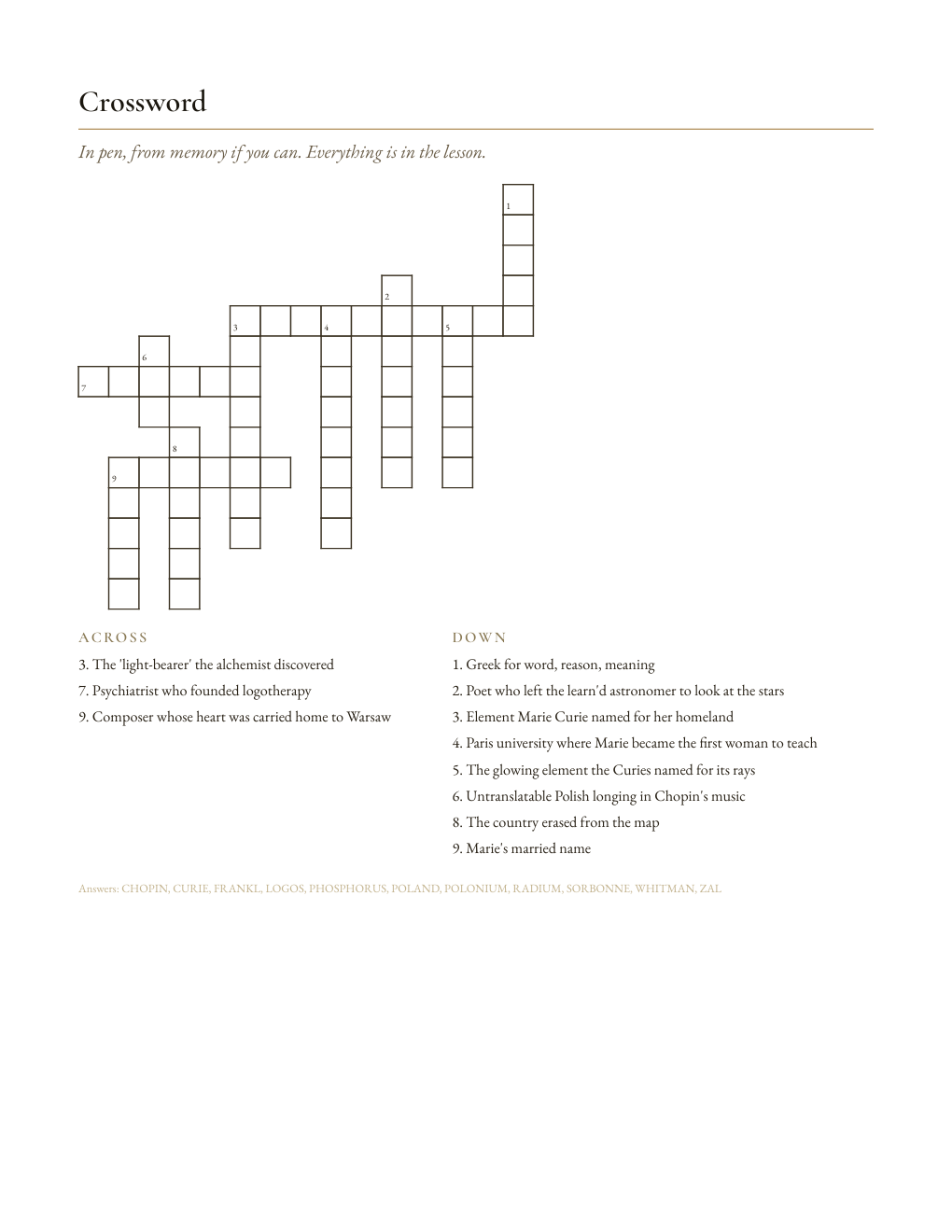
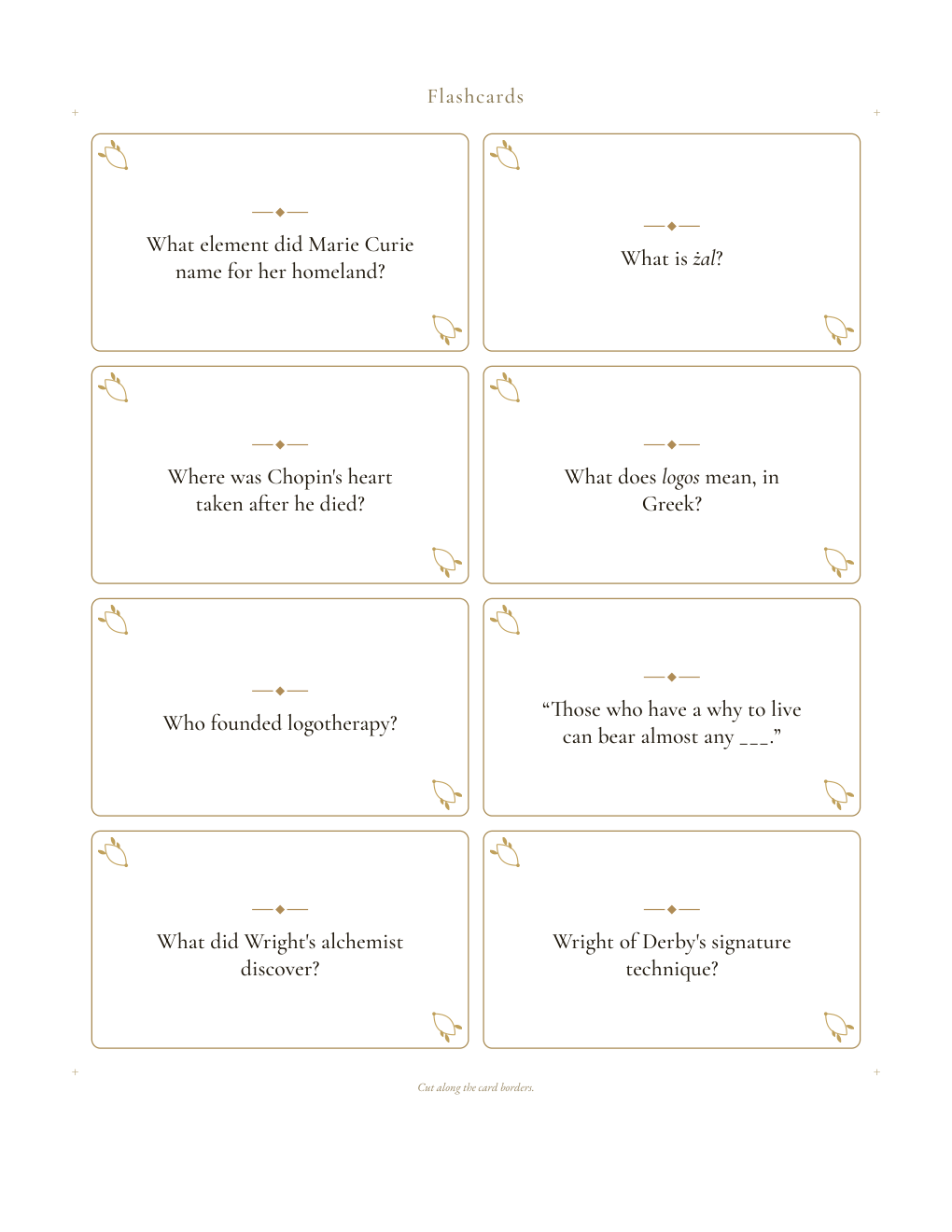
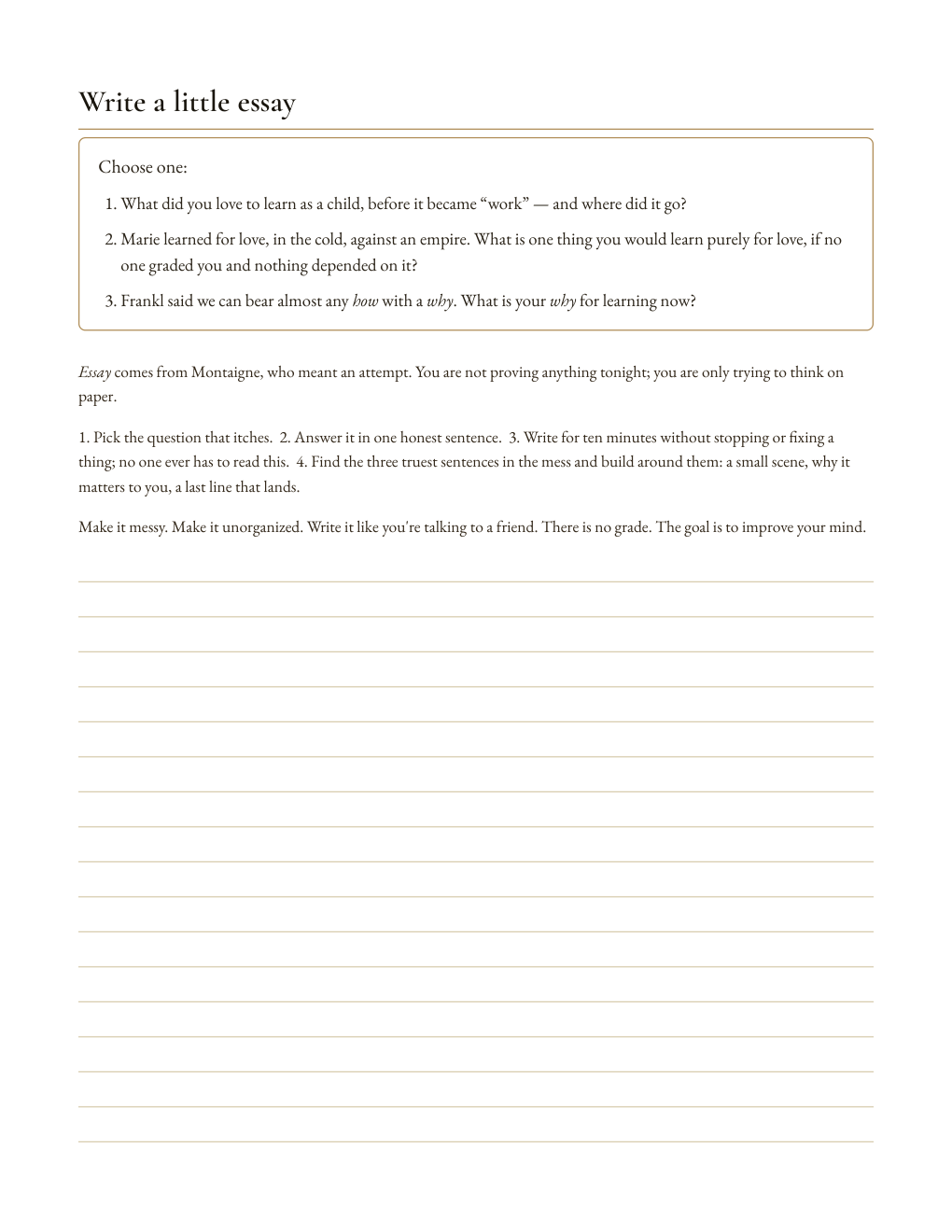
Keep the lamp lit
Every lesson here is free, and stays free, because patrons pay for the wax that keeps the candles lit. Become a patron or founder to download the printable kit and the Anki deck, and to be the reason the next reader finds all of this open and free.
The lamp stays lit because you fill it.
Your study kit
Yours because you keep the lamp lit. Print it, work it, keep it.
History: a university for three
They called it the Akademie Olympia: the Olympia Academy.
It was a joke. Olympia is the home of the gods, and an academy is Plato's own school. Three men with holes in their pockets, giving both names to a rented room with a table, some chairs, and a lamp. They elected Einstein president. They drew up mock diplomas, handed each other grand fake titles, and received them with tremendous ceremony, which is to say they took the fun of it seriously.
There is one photograph of them from those years.
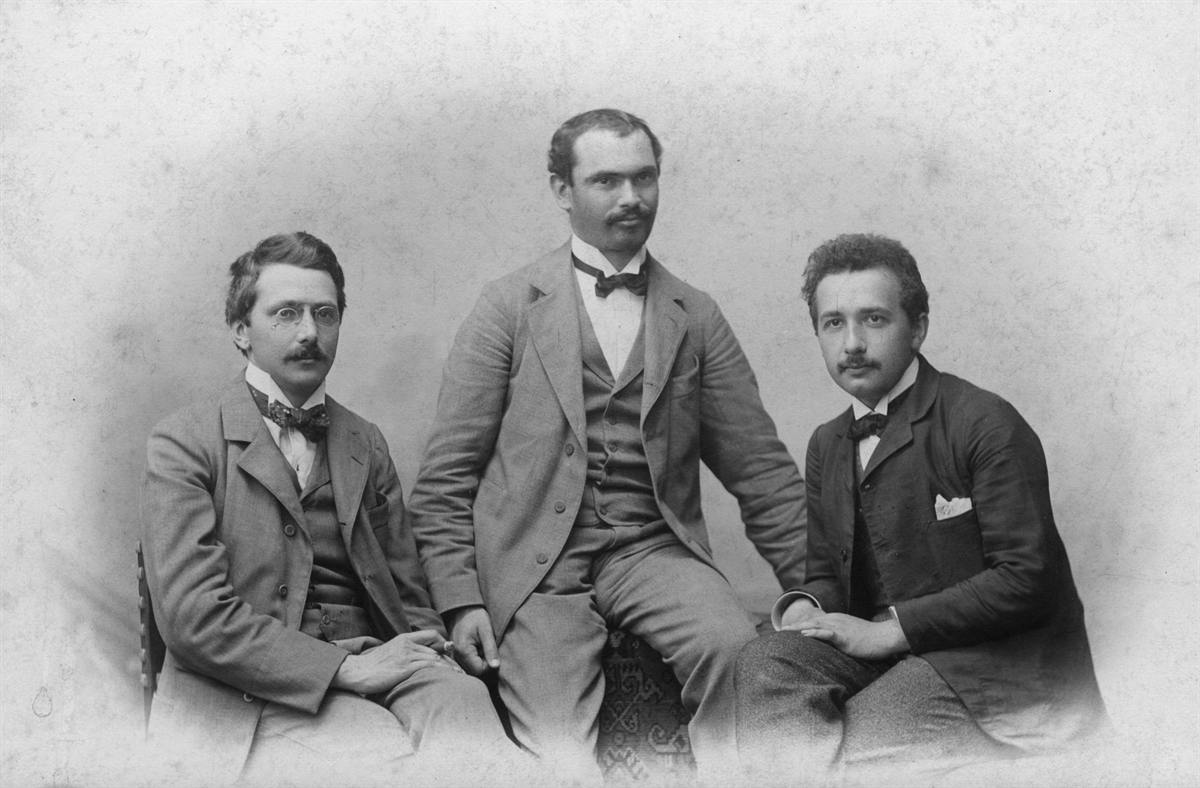
Most nights supper was the same: sausage, a wedge of Gruyère, some fruit and honey, and tea. Then they read. One of them would read a few pages of something hard out loud. The reading would stop at the first sentence worth fighting about, and the fight would go until two in the morning, or until they gave up and climbed the hill above the city to watch the sun come up. Then Einstein would walk to the patent office and put in a full day on no sleep, perfectly happy.
For one of his birthdays, the others pooled their coins and bought caviar, a real extravagance, and laid it on his plate as a surprise. Einstein, in the middle of a point about Galileo and falling bodies, ate the whole tin without once looking down. When they howled, he was baffled. To a man who does not care about food, he said, caviar and bread are the same. They served it to him again another night, just to catch him out.
He did it again.
He married that winter. His wife, Mileva Maric, studied physics beside him at Polytechnic, one of the only women in the lecture hall, and she sat in on the Academy too, off to the side, quiet, sewing, listening to a room of men who never quite made a chair for her.
But the room was alive. Half a century later, world-famous, Einstein wrote that this ridiculous little academy of three had been "far less childish than the respectable ones I later came to know."
Philosophy: the books that unwound time
What did a university of three actually read?
Everything!
Ernst Mach's physics and Henri Poincaré's mathematics, yes, but also David Hume and Spinoza and John Stuart Mill, because to these three there was no fence between physics and philosophy. A question about the world was a question about the world.
And the reading did real work. This is the part people skip past about Einstein, and the part he never let anyone skip. The philosophy was not decoration. It was the crowbar.
Hume, a Scot a hundred years dead, had said the unsettling thing first. Do not trust an idea just because you have always held it; make it answer to experience, or admit it is only a habit in a crown. Mach took that blade to physics and cut to the bone. This "absolute time" that Newton had built the whole universe on, the same steady tick everywhere at once: had anyone ever actually measured it, or had we all just been assuming it, for centuries, because it felt too obvious to touch?
Einstein read those two aloud in that room, arguing every line, and he said later, plainly, that without them he might never have found the door. They taught him to doubt the most obvious thing there is: that two clocks, in two different towns, agree on what time it is now.
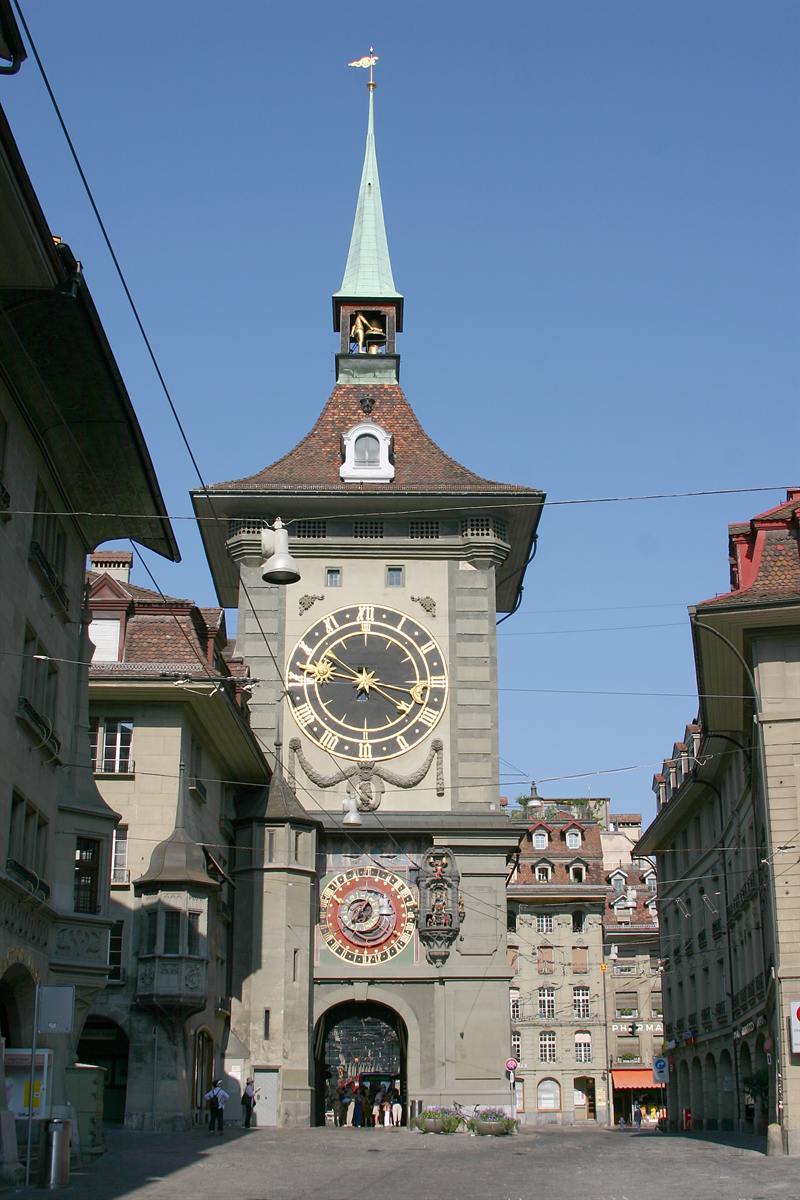
His day job was clocks. The country was busy wiring its train stations together, and application after application at the patent office crossed his desk to synchronize clocks city to city by electric signal. All day, he checked other men's answers to one question, and every evening the Academy chewed the same question in the abstract.
After three years, in 1905, he put his day job and his intellectual evenings together and found the answer: there is no absolute time.
Two flashes that look like a single instant to you are two separate instants to someone hurrying past you, and you are both right, and the "now" you have trusted your whole life turns out to be yours alone.
Only light keeps the same speed for everyone.
He mailed that off in June. It was one of four papers he wrote that year, any one of which would have made a career. One proved atoms are real. One cracked open the quantum world and would win the Nobel Prize. One was relativity. And one, a few pages tacked on in September almost as an afterthought, carried a small equation: E = mc2.
Four papers in one year: they call 1905 Einstein's miracle year.
He would have hated the word "miracle". He knew exactly where his knowledge came from: from the reading, from the arguing, from the slow stubborn doubting of the obvious.
The important thing is not to stop questioning. Curiosity has its own reason for existing.
Literature: the man who read too much
Of every book the Academy read aloud, the one Einstein loved longest was not physics at all. It was a novel, and a funny one: Don Quixote.
A quiet country gentleman reads so many tales of knights that something in him tips over, and he decides, at an age when a man should know better, to become a knight himself, with rusted armor and a bony old horse. He renamed a farm girl "his radiant lady". He rides out to set the world right, charges a line of windmills—certain they are giants—gets beaten half to death for it, and is still the most alive man for a hundred miles. In four hundred years, no reader has ever settled whether to laugh at him or weep for him.
Einstein kept it by his bed his whole life.
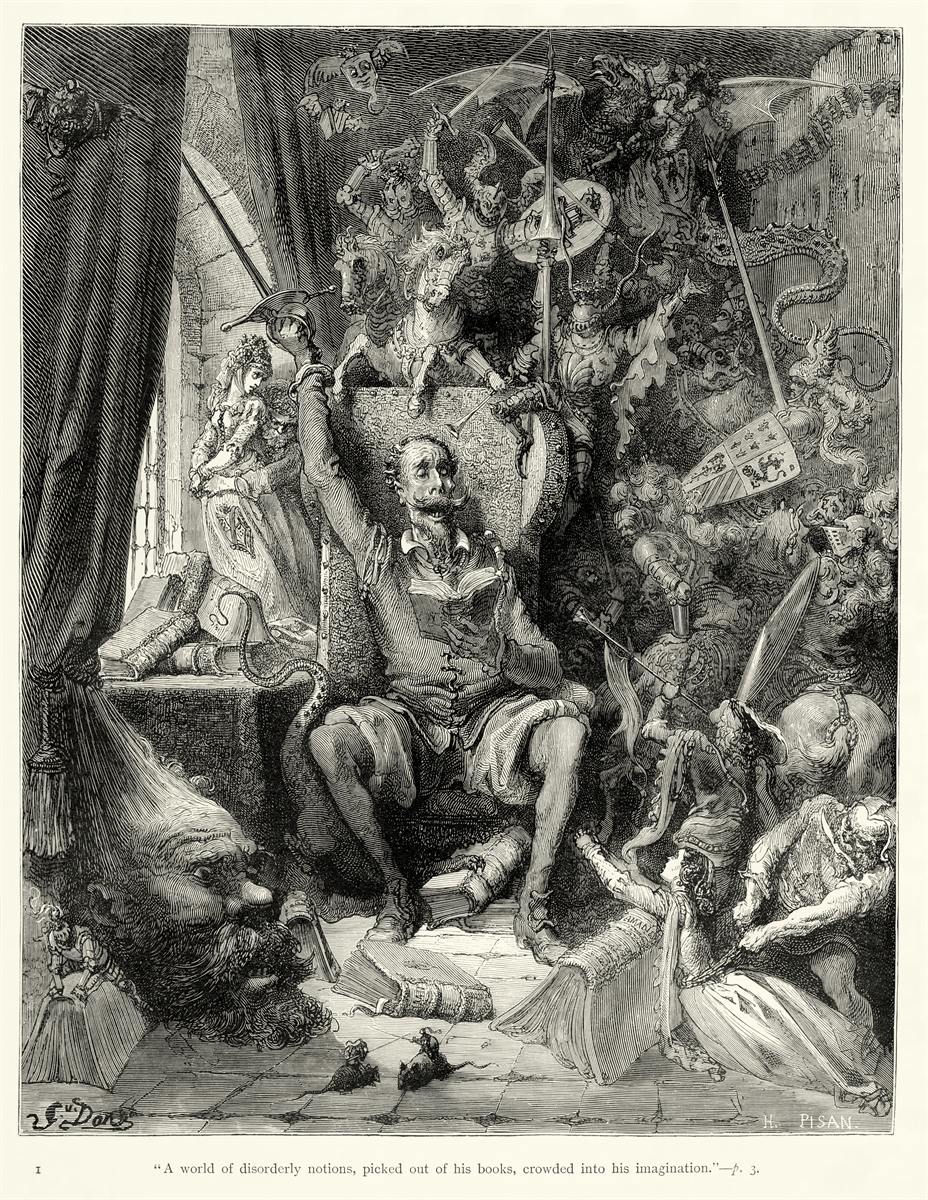
Three penniless nobodies looked at Isaac Newton's universe and decided they would redo it. There is a word for people like that: quixotic. It means gloriously, hopelessly unreasonable—or tilting at windmills.
The joke buried under all the fake diplomas and the sausage suppers is that this time the windmills really were giants.
The three of them were right!
That is what the book has been trying to tell anyone brave enough to look foolish. Almost everything real that anyone has ever made started as one person being unreasonable in a small room, dead certain of a giant the whole world swore was a windmill.
Music: the violin in the kitchen
Einstein carried a violin nearly everywhere he went. He had been made to take lessons as a small boy and had hated them the way small boys do, right up until he ran headlong into Mozart around the age of thirteen and fell in love so hard it never once let go.
If I were not a physicist, I would probably be a musician. I often think in music. I live my daydreams in music.
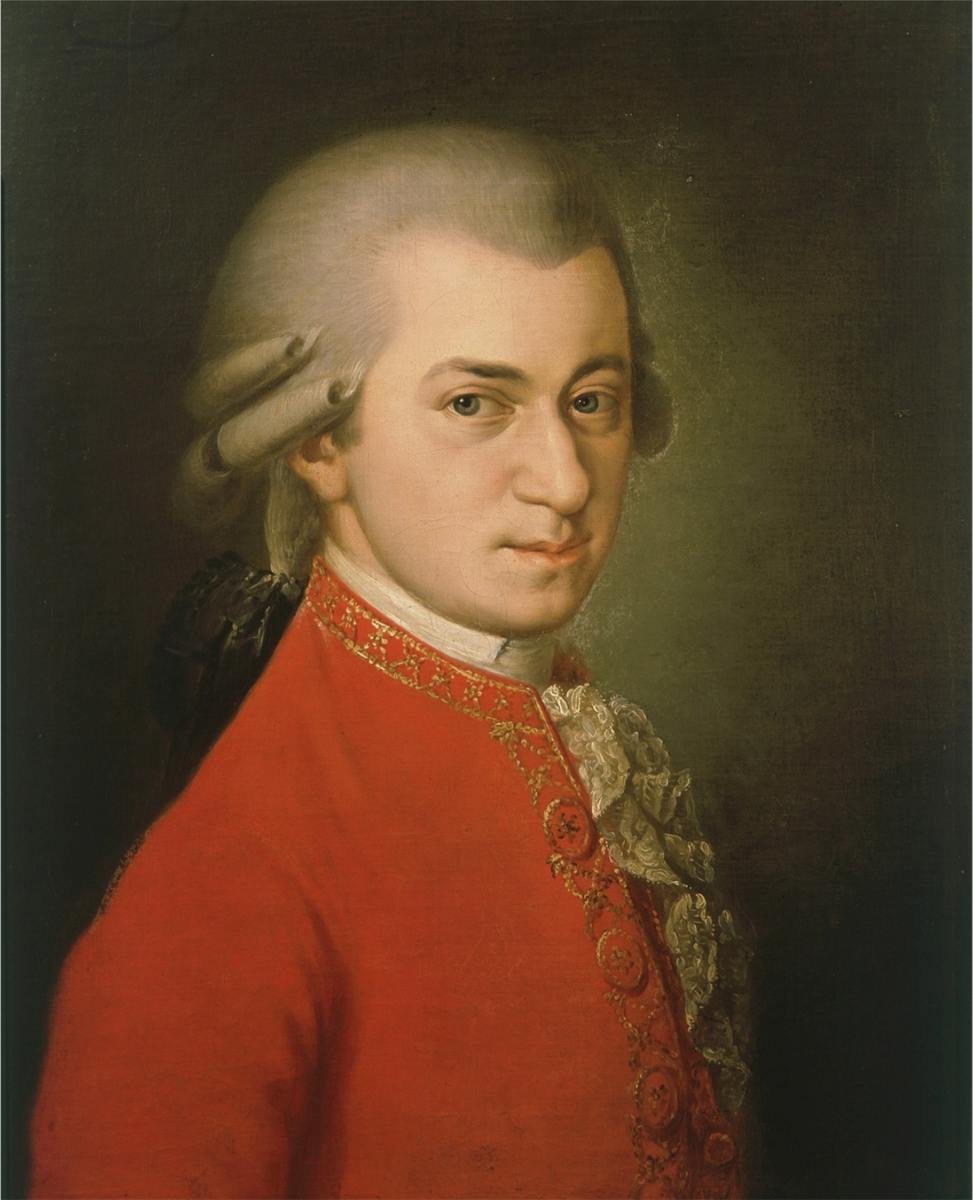
When he couldn't solve a puzzle, he played music. His son remembered that his father would work at the desk until he hit a wall, then stand, cross to the piano or pick up the violin, and play nothing in particular, just playing and thinking and playing, and then, sometimes, right in the middle of a phrase, he would stop dead, say "there, now I have it," and go back to the desk with the answer.
The music did not solve the problem. The problem got solved somewhere the desk could not reach, and the playing was how he got there. Anyone who has practiced anything with their hands knows the place I mean. It is the back door into your own mind, the one that only opens when the front of the house is busy with something beautiful.
The one piece playing tonight is his. Mozart's violin sonata in E minor, the only one Mozart ever wrote in a grieving key, the year his mother died. It is exactly the kind of thing Einstein reached for. Somewhere in Bern, on some night when relativity would not come, a young clerk stood in his kitchen and played something very like it until it did.
Art: look before you read on
Let your eye go where it wants first. Maybe it will land on the fat pale donkey up front, and the heavy man slumped on it with his back to you. Then look past him, up the road, and find the other one.
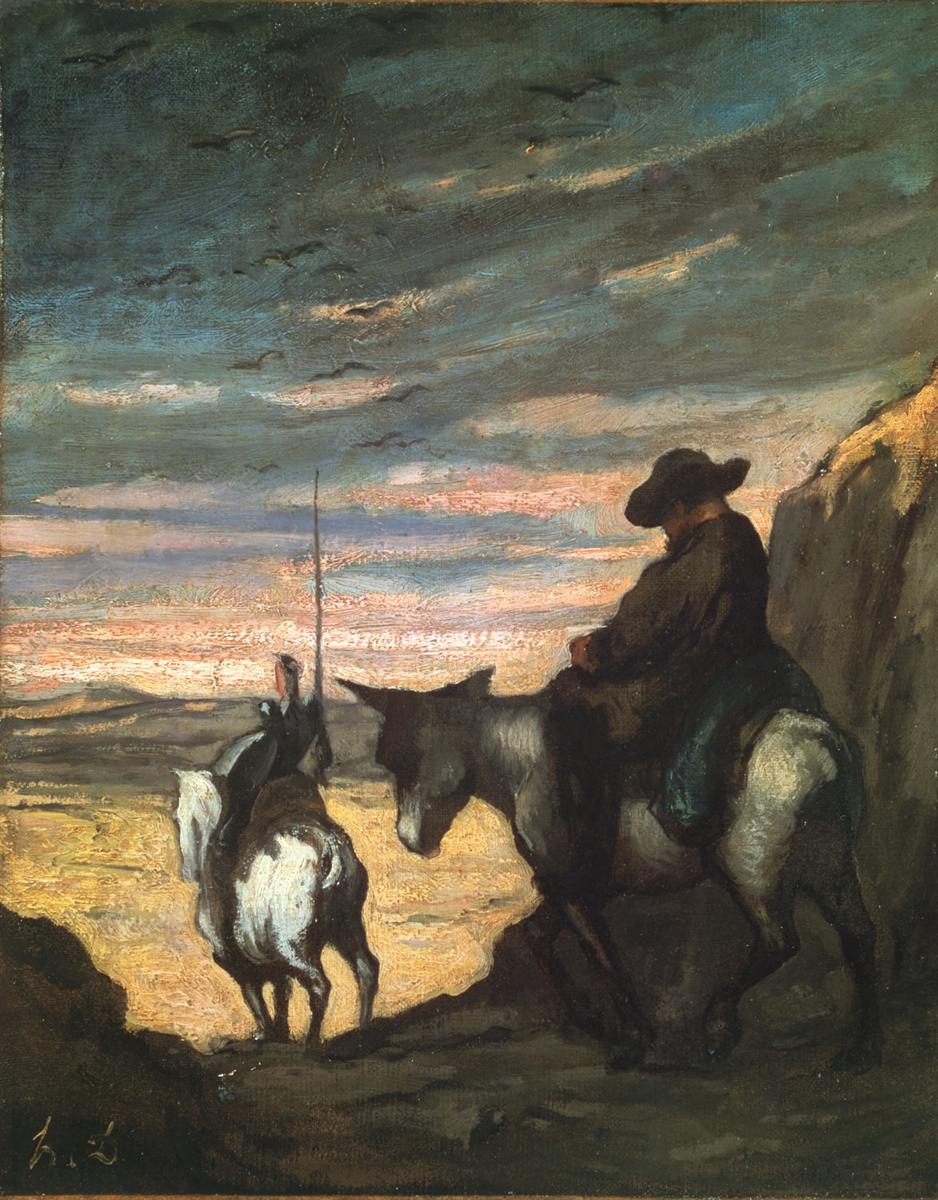
It is Don Quixote again, our knight from a few pages back, painted three hundred years after Cervantes by a Frenchman named Honoré Daumier. He painted Don Quixote over and over, dozens of times, through the end of his life.
Look at how he painted them: close, huge, tired, and earthbound, filling the whole front of the picture, is Sancho, the servant, hunched on his little donkey. And far off, thin as his own raised lance, rides Don Quixote, up toward the last band of light in the sky, going where the giants are.
The dreamer is ahead in the story and tiny on the canvas. The friend is enormous and close and following him anyway, down into a dark valley under a wild sky.
In that failing light, one man riding at the horizon and one friend making sure he is not out there alone, and then compare to the three young men in a rented room in Bern.
Every mad quest needs a Sancho.
Einstein had two.
Language: five small things to keep
The Academy left words scattered all around us, some Greek, some German, some Latin. Five to carry out with you.
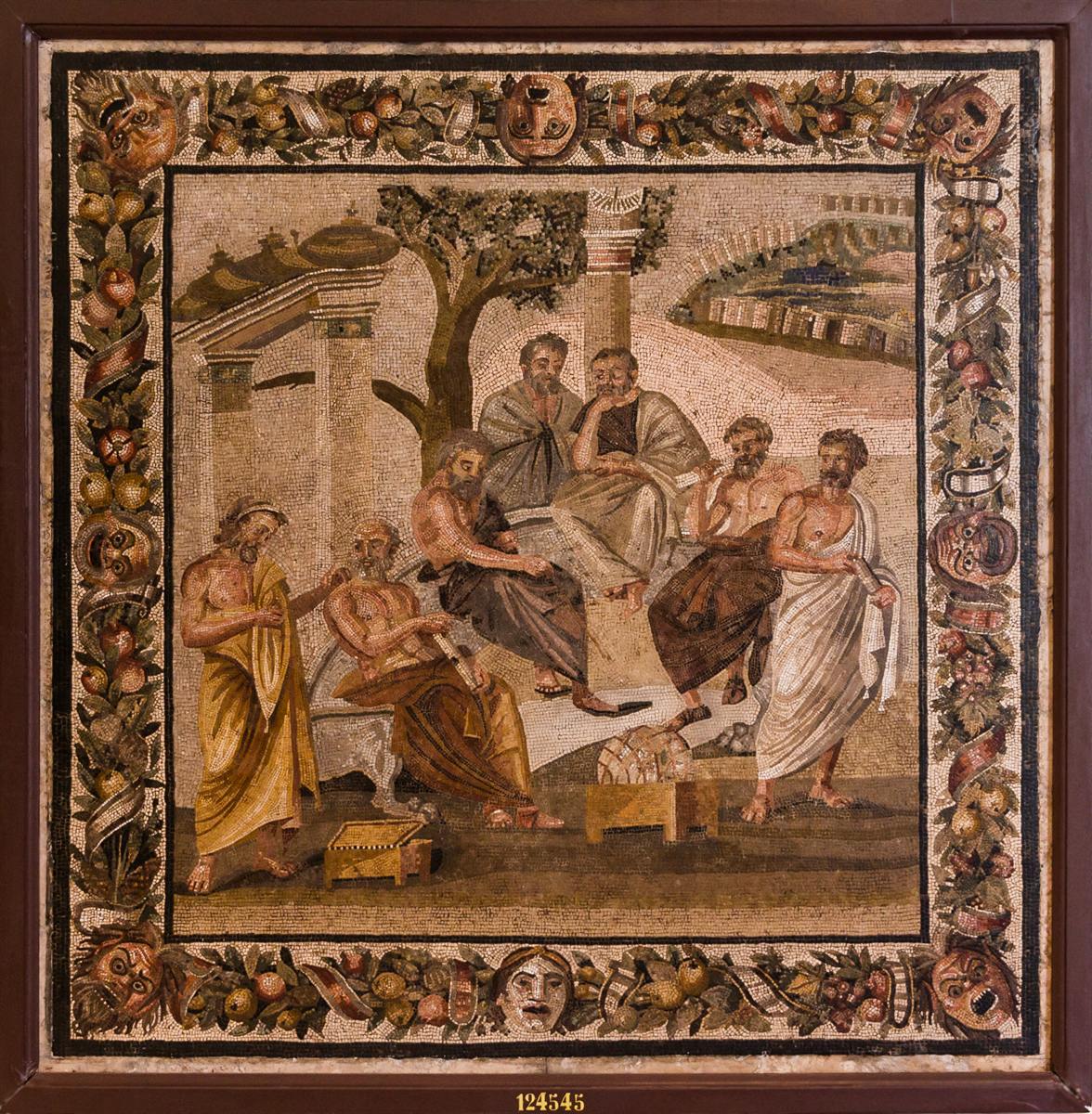
Akademie Olympia. (ah-kah-DAY-mee-uh oh-LEEM-pee-uh.) Two jokes in two words. Akademie comes from Akademos, who owned a shady grove outside Athens where Plato liked to teach; the grove lent its name to the school, and the school lent it to every place of learning since. Olympia is the mountain of the gods. Three broke friends named their supper club the Grove of the Gods, laughing the whole time, and were dead right about what they were building.
Gedankenexperiment. (guh-DAHN-ken-ex-pair-ee-ment.) German for "thought experiment." Gedanke, a thought, plus experiment. It is the laboratory you carry in your head, the one with no budget and no walls, and no one has ever run it better. Einstein said the whole road to relativity opened at sixteen, when he wondered what he would see if he could ride alongside a beam of light. He never stopped. He just did his experiments in a chair.
Annus mirabilis. (AH-noos mee-RAH-bee-lees.) Latin, "year of wonders." It was handed down from an older one, 1666, the plague year a young Isaac Newton spent home from Cambridge quietly inventing calculus and gravity in his mother's garden. History gave Einstein the same phrase for 1905. It is the word for the thing no one believes until it happens to them, that sometimes all of it comes at once.
Relativität. (reh-lah-tee-vee-TAYT.) Relativity, from the Latin relatus, "carried back," related. A hundred years of people have taken it to mean "everything is relative, nothing is true, it all depends how you feel." It means almost the opposite. Motion only has meaning next to something else, and once you accept that, one thing turns out to be nailed down for everyone in the universe, forever. The speed of light.
Patent. (PAT-ent, or PAY-tent.) From the Latin patere, "to lie open." The old phrase is litterae patentes, "open letters," a grant any passerby was allowed to read, as opposed to a private sealed one. Einstein's whole day job was open letters about how the world works. There was never a better trade for the man who came to believe the universe itself was written plainly, lying open, waiting on anyone curious enough to read it.
History again: the immortal academy
The Academy lasted about three years, and then life did what life does. Solovine moved to Paris. Habicht went off to teach. Fame found Einstein and carried him up and out: a real professorship at last, then Berlin, and then, when Germany turned murderous, a ship across the ocean to Princeton, where he became the most famous scientist who ever lived and the wild white hair the whole world still pictures when it hears the word genius.
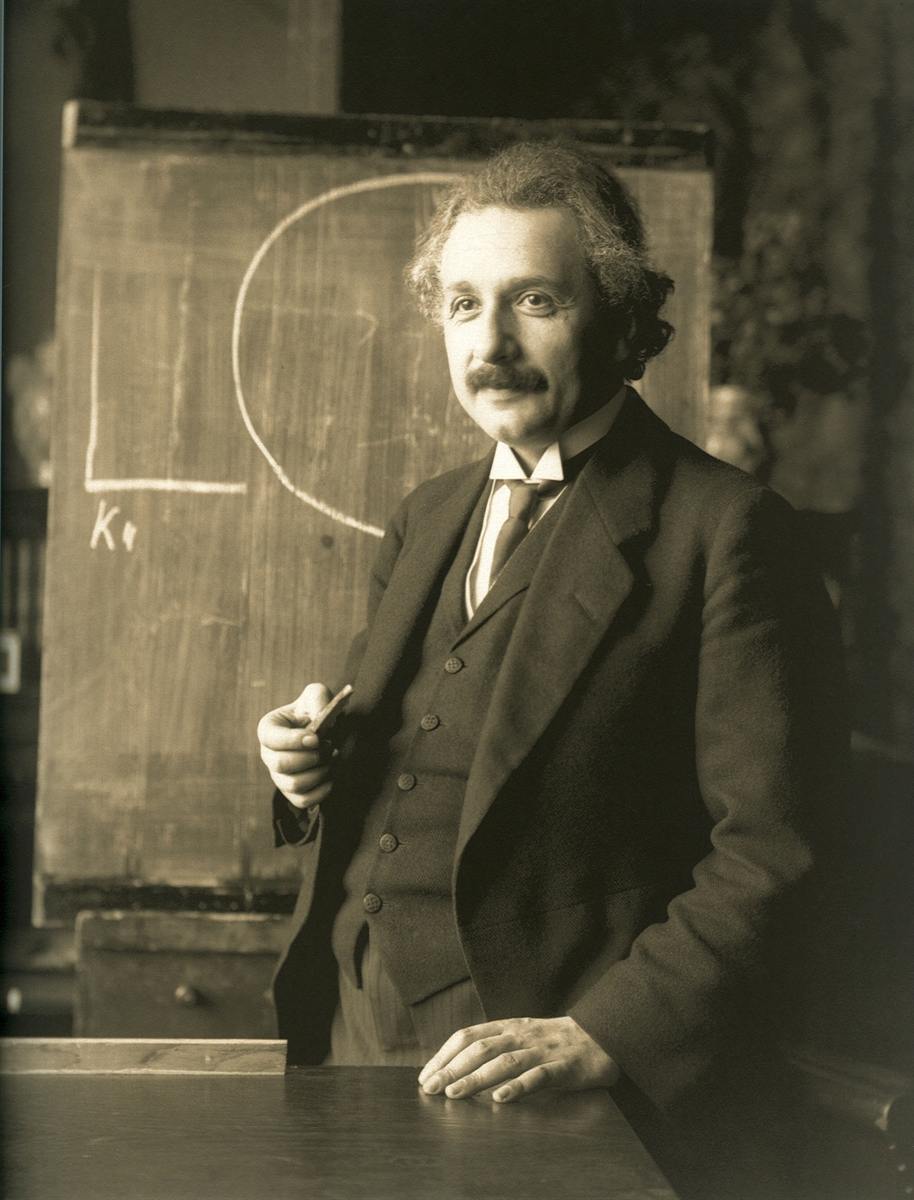
Fifty years after the sausage suppers, the old man in Princeton sat down and wrote a letter to a club that had not met since he was young.
He wrote it to the Academy itself, as if it were a standing institution with a seal and a history, which, in every way that counts, it was. He wrote to it tenderly, half in the old joke and half in earnest. He thanked it. He said its founders had cooked it up only to amuse themselves, and that it had gone on to give them the best hours they would ever have.
He signed himself its faithful member.
The letter went to Maurice Solovine, who had knocked on a door fifty years before answering an ad for three-franc physics lessons. Both his friends were still alive to know the old man had forgotten neither of them.
Three young men who had nothing. Who could not get a single university to take them. Who built their own out of a table, a lamp, and a stack of borrowed books, refused to wait for anyone's leave, and were still, half a century and one ruined and remade world later, an academy.
Remember what you've learned
No exam. Nobody is taking attendance, and nobody did then either; the Olympia Academy never asked more of anyone than that they turn up hungry to talk, which is the only enrollment that has ever counted, and it is the one you just made.
Before the lamp goes out, open the commonplace book. Keep the line about questioning, or the grove of the gods, or the windmills that turned out to be giants, whatever it was that stopped you tonight. The crossword and the essay will keep, for this evening or another.
There were three chairs at that table. Nothing on earth is stopping you from pulling one up. You have the books. You have the lamp. You have the only two things the Academy ever really ran on, which were curiosity and company, and you can start one tonight, with a friend, or with me.
Make it fun!
Come be curious with me.
Your fellow student,
K. Larkin
PS: Remember to mark this lesson complete for your progress to show.
A desk of your own, filling lesson by lesson
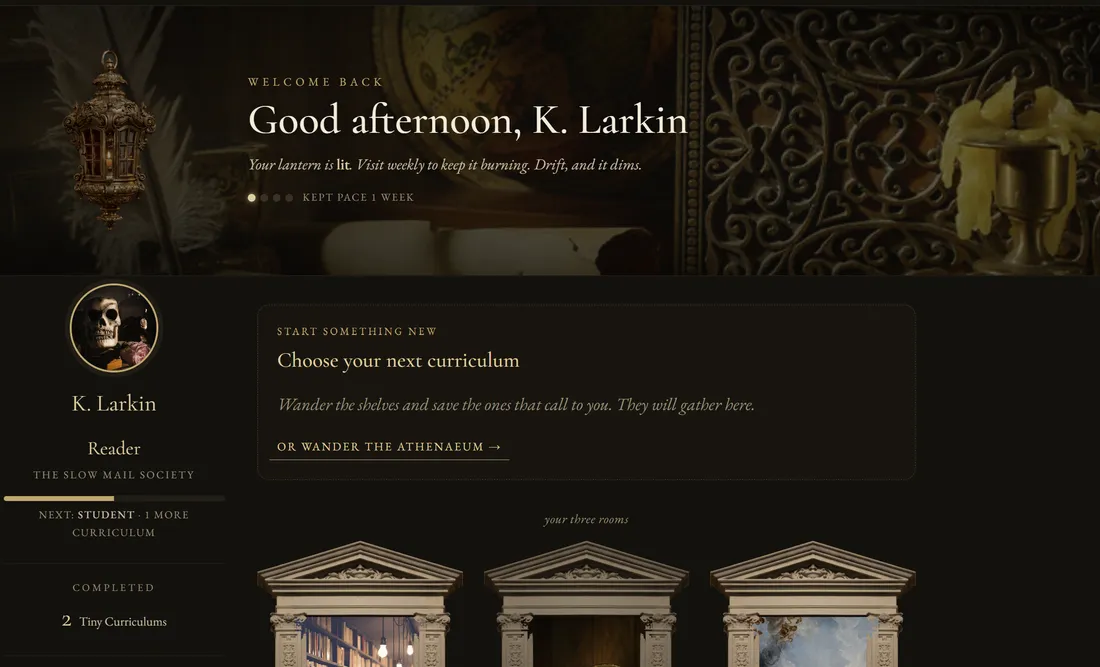
Your lantern, your shelf, your progress
What is in the kit
Keep the lamp lit
Every lesson here is free, and stays free, because patrons pay for the wax that keeps the candles lit. Become a patron or founder to download the printable kit and the Anki deck, and to be the reason the next reader finds all of this open and free.
The lamp stays lit because you fill it.
Your study kit
Yours because you keep the lamp lit. Print it, work it, keep it.